The Work Identity Conversation
For experienced professionals who sense something has shifted in their work — and are ready to understand it properly.
You’ve been carrying this long enough.
It’s time to understand what it actually is.
This is a focused 30-minute professional conversation for experienced professionals whose work no longer feels right — but who haven’t yet been able to name precisely why.
Not a coaching session.
Not a discovery call.
Not career advice.
A conversation in which what you’ve been experiencing begins to make sense.
Reserve Your Work Identity ConversationFree. Focused. Conducted personally by Henry K.
Most people move too quickly…
Because they’re answering the wrong question.
When work no longer feels right, most people assume the answer is obvious:
“I need to push through.”
“I should just be grateful.”
“Maybe I need a new role.”
But those are answers to a question they haven’t properly examined yet.
Because the real question isn’t always: “Should I leave?”
The real question is: "What exactly no longer fits?"
Without answering that first, you risk making decisions based on frustration rather than truth.
And that’s how people leave one misfit…only to recreate another somewhere else.
Most professionals don’t fail because they ignore the problem.
They fail because they misdiagnose it.
So they keep trying to solve the wrong thing.
They look for more motivation — when the real issue is misalignment.
They look for a new role — when the real issue is identity.
They look for more money — when the real issue is meaning.
They look for a new environment — when what’s actually needed is a deeper rethink.
And if you’re honest — you’ve known something was off for a while.
You’ve felt it.
But without properly naming the real issue,
it’s easy to keep reaching for solutions that never actually resolve it.
That mistake can cost years.
Once you can clearly see whether this is:
A role problem. An environment problem. An identity problem. Or a reinvention problem.
Your next move becomes something different entirely.
Not easier. But clearer. And far more honest.
So you don’t leave one version of misfit and quietly rebuild it somewhere new.
Book A Work Identity ConversationThere Is A Name For What You’re Experiencing.
It’s called Deferred Alignment™.
And understanding it may be the most useful thing you do before making your next professional move.
What it is:
Deferred Alignment™ is what happens when a professional has outgrown their work — but continues performing well enough that neither they nor the outside world fully interrupts it.
The work still gets done. The income continues. The reputation remains intact. The external picture looks entirely functional.
But internally, something fundamental has shifted. The work no longer corresponds to who you’ve become. The values that once drove you have evolved. The version of success that motivated you earlier in your career no longer resonates — but you haven’t yet built the language or the framework to understand what you actually need instead.
Why capable people are most susceptible:
The more competent you are, the more effectively you can manage misalignment without anyone — including yourself — fully registering it as a problem.
Your performance doesn’t visibly suffer. Your colleagues don’t notice. Your income continues. And because nothing has obviously broken, there is no forcing event — no clear signal that something must change now.
So you continue. And the misalignment continues with you.
Not because you’re weak or passive. But because your competence is functioning as camouflage.
How it develops:
Deferred Alignment™ rarely arrives suddenly. It builds in layers.
First — a subtle shift in how your work feels. Less energising than it used to be, but manageable.
Then — a growing sense that the work no longer quite represents your actual thinking or values, though you continue doing it well.
Then — the gradual erosion of natural motivation. You’re generating the same outputs, but the internal fuel that once came naturally now requires increasing effort to sustain.
Finally — the quiet recognition that you are performing a version of yourself that no longer fully exists. That the role requires you to translate who you are into a currency your work can use — and that translation is costing more than you can account for.
What it costs:
Because the costs of Deferred Alignment™ are invisible, they are also unmeasured.
You are carrying a constant overhead tax — on your energy, your thinking, your decision quality, your relationships, and your long-term trajectory — that never appears on any performance review or career assessment.
The compounding effect is significant. Each year spent in Deferred Alignment™ makes it marginally harder to locate and trust your actual judgment. The gap between who you are and what your work asks of you quietly widens.
Deferred Alignment™ doesn’t explode your life. It quietly steals it.
The first step is not a decision about what to do next.
The first step is understanding that this is what’s happening — and that it has a name, a mechanism, and a solution.
Understand Deferred Alignment™ more deeplyWhy Most Career Moves Don’t Solve The Real Problem
Most career advice focuses on movement.
Update your CV.
Refresh your LinkedIn
Apply elsewhere.
Push through.
Start over.
But when your work no longer feels right, movement without understanding becomes repetition.
Because the real risk isn’t always staying where you are.
Sometimes the bigger risk is moving too quickly — without understanding what actually went wrong.
This approach is built around one principle:
Before you make your next move — understand what no longer fits.
Because not every misalignment requires the same response.
Sometimes you need a role shift.
Sometimes you need an environment shift.
Sometimes you need a strategic redesign of how you work.
And sometimes — you need deeper reinvention.
But if you skip the understanding first, you can spend years solving the wrong problem.
Most career advice teaches you how to move.
This helps you understand why — before you do.
Book A Work Identity ConversationCapable people don’t usually stay too long because they lack options.
They stay — or move wrongly — because they misdiagnose the problem.
When you’re competent, responsible, experienced, and outwardly successful, it’s easy to assume the safest move is either:
stay where you are — or leave for something similar.
But without proper understanding, both can cost you years.
Because when you don’t identify the real source of misfit, you risk:
Staying too long in work you’ve already outgrown.
Leaving too fast and solving the wrong problem.
Recreating the same misalignment in a different role.
This isn’t about making faster moves.
It’s about making the right move — based on truth, not urgency.
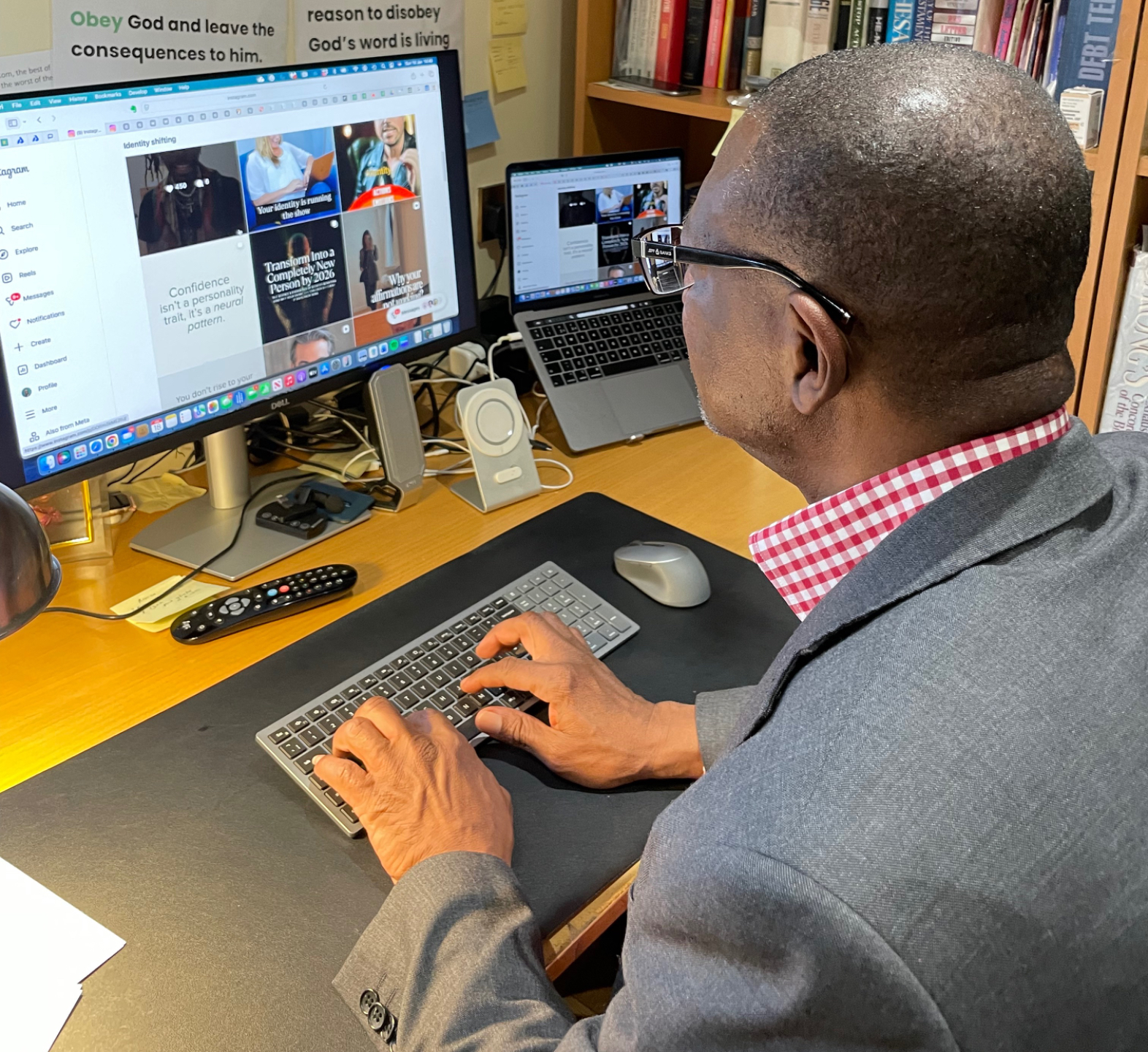
Henry K - Work Identity Strategist
I’ve spent over two decades working with and alongside senior professionals navigating the gap between outward success and internal misalignment.
That experience produced the Deferred Alignment™ framework — a diagnostic model built specifically for professionals whose competence has outpaced the meaning of their work.
I’ve guided professionals across financial services, consulting, technology, and the public sector through the Work Identity Diagnostic. The consistent finding: capable people in misalignment don’t need motivation. They need accurate diagnosis.
My role is not to tell you what to do.
It is to help you understand your situation precisely enough that the right decision becomes obvious to you.

What Professionals Say.
“I’d been circling the same internal questions for nearly two years. Within the first twenty minutes, Henry named something I hadn’t been able to articulate in all that time. I didn’t leave knowing exactly what to do — but I left knowing exactly what was happening. That changed everything.”
— Senior Manager, Financial Services
“Henry named something I’d been carrying for two years but couldn’t articulate. The precision changed how I understood my own situation entirely.”
— Director, Professional Services
“What struck me was the absence of agenda. Henry wasn’t pointing me anywhere. He was helping me see clearly. That’s a rare thing.”
— Partner, Consulting Firm
Common Questions
I’ve read about this kind of thing before and nothing changed.
I’m not sure my situation is serious enough.
I don’t have time right now
How is this different from talking to a trusted colleague or mentor?
What if I do this and still don’t know what to do?
Book A Work Identity Conversation
Not sure where to start?
Begin with a conversation.
Before anything else — before any decision, any diagnostic, any next move — sometimes you simply need to talk to someone who understands what’s actually happening.
The Work Identity Conversation is a free 30-minute session for professionals who sense something has changed in their work but haven’t yet been able to name it precisely.
This is not a sales call.
This is not a coaching session.
This is not a pitch for a programme.
It is a focused professional conversation in which we examine what’s shifted in your work identity — and what that might mean for what comes next.
In 30 minutes you will:
- Begin to understand why your work no longer feels right
- Hear your experience reflected back with precision and without judgment
- Get a clearer sense of whether the Work Identity Diagnostic is the right next step for you
Some people leave the conversation with enough to act on immediately.
Others choose to go deeper through the Work Identity Diagnostic.
This is where the situation begins to make sense.
Book A Work Identity Conversation
A small number of conversations are available each week.
No obligation. No pressure. Just precision.
What Becomes Possible After The Work Identity Diagnostic
The diagnostic doesn’t end with a report.
It ends with a different relationship to your own professional judgment.
Professionals who complete the Work Identity Diagnostic consistently describe a shift that goes beyond the session itself.
Decisions become easier to make — not because the options change, but because you’re making them from an accurate understanding of what you actually need rather than a vague sense of what feels wrong.
The internal noise quiets. The circular thinking — the same questions revisited at 3am, the same arguments made and unmade — loses its grip. Not because the situation has resolved, but because you finally understand what the situation actually is.
Your professional compass recalibrates. When you know what alignment looks and feels like for you specifically — at this stage, with these values, with this evolved identity — you evaluate opportunities differently. You stop measuring everything against what made sense five years ago and start measuring against what fits who you’ve become.
Movement becomes intentional rather than reactive. Whether you stay, adjust, or reinvent — the decision is made from understanding rather than frustration, from precision rather than pressure.
This is what the Work Identity Diagnostic ultimately produces.
Not a plan. Not a set of instructions.
A precise understanding of your situation — from which the right next step becomes clear.
Because once you can see it clearly — your future changes.
Before you make your next move — make sure it’s the right one
A new role will not automatically fix what you haven’t properly understood.
Before you leave, stay, or pivot —understand why your work no longer feels right first.
There is no perfect moment to examine this.
The nature of Deferred Alignment™ is that it always feels manageable enough to defer — until the cumulative cost becomes impossible to ignore.
The professionals who act earliest pay the least.
Not in money. In years.
Book A Work Identity ConversationYour next move matters.
Make sure it’s built on truth.
